- Get Involved
- BBYO Near You
- Summer Experiences
-
International Convention
International Convention
-
AZA & BBG Movement
AZA & BBG Movement
- About BBYO
Connection
Parashat Vayakhel Pekudei

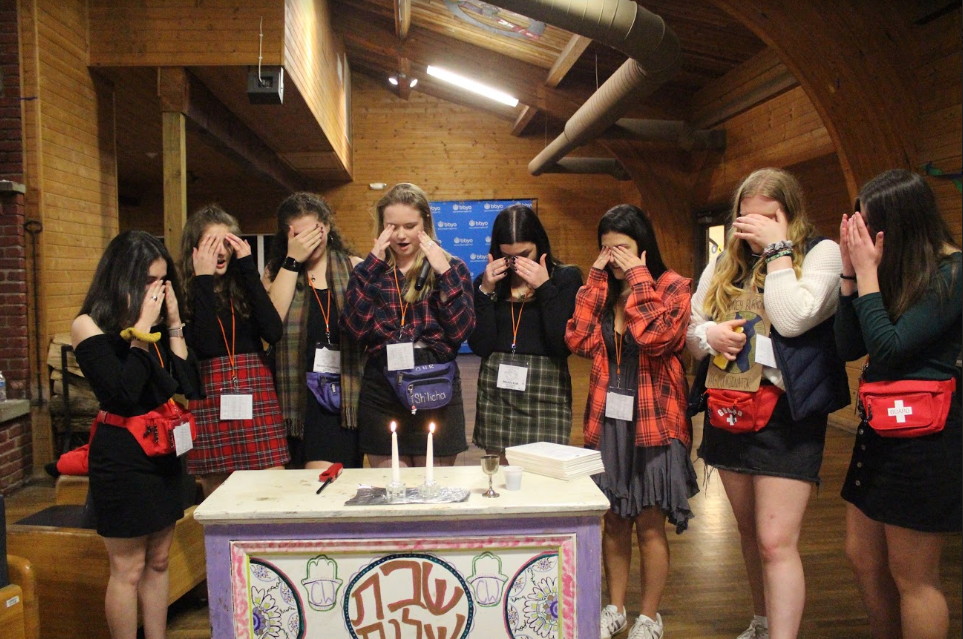
Vayakhel Pekudei from Exodus 35:1 to 40:38 is the story of how the Jews built the Mishkan. The story begins by the Israelites gathering together to celebrate the Sabbath. While they are gathering, God calls out to Moses telling him that while everyone is gathered together, they should bring supplies to help build the Tabernacle.
As the Jews arrived, they brought an abundance of supplies ranging from richly dyed cloths, silver, gold, copper, precious stones and crystals, and many other valuable and supportive materials. Everyone brought so many supplies, there were some left over once the entire Tabernacle was complete. Having enough supplies to build this beautiful edifice, and enough room for everyone to congregate in.
The Jewish people built the beautiful Mishkan with 48 gold plated walls, a three-layered roof, and a veil that separated the sanctuary into two chambers. They of course kept the seven branched Menorah that held the oil that shines bright. Once they were finished building the Mishkan, the Jewish people were so thrilled that they had a place where they could come together to pray and celebrate holidays as a whole.
The Tamud tells us that even though we do not have Mishkan of a Bet HaMikdash, instead we have the synagogue. It is our local synagogue that functions much like the beautiful houses of worship mentioned in the Torah. Today, there are hundreds of thousands of Synagogues around the world that Jewish people go and pray together to follow how our ancestors did many years before us. While many people do not go every day or every Shabbat, the joy and warm feeling there is when sitting in Synagogue with a strong tight knit community is the best feeling in the world.
What can we do today when we are not allowed to enter the synagogue because of the restrictions caused by the coronavirus? We must do our very best to create a virtual Mishkan, a beautiful, digital place of gathering that is defined neither by space or even time, rather the gathering of thoughts, prayers, and ideas that is created by our shared dialogue and shared experiences.
Shabbat Shalom,
ONR Shlichim, Jamie and Max
All views expressed on content written for The Shofar represent the opinions and thoughts of the individual authors. The author biography represents the author at the time in which they were in BBYO.
Explore More Stories
Identity

Taking The Risk
A personal reflection on what it means to risk starting over in order to feel safe and proud being Jewish.
Identity

The Importance of Traditions
From pancakes to paperclips, traditions build connections and friendships.

Opinion

Seatbelt Stories
Giving rides to underclassmen in BBYO, and in general, hits different. Why?