- Get Involved
- BBYO Near You
- Summer Experiences
-
International Convention
International Convention
-
AZA & BBG Movement
AZA & BBG Movement
- About BBYO
Connection
Parasha Lech Lecha: One Phrase, Different Meanings


Out of all the Parshiot in the Torah, this week’s Parsha, Parshat Lech Lecha always stood out to me. I believe that it is because the Parsha is iconic; it explains many of the values still fundamental to how many Jews live today.
I still remember sitting in a classroom, in a corner, with my Morah Miriam teaching us by heart the following sentence: "God took him outside and said, 'Look at the sky and count the stars if you can! So will be your descendants.'" (Gen. 15:5). It’s some sort of reassurance to Abraham that his efforts aren’t in vain; it’s a guarantee that all the sacrifices will come with a reward.
Abraham leaves all he knows on a promise. Unbeknownst to him, his descendants would do that time and time again. Jews left their homes in search of safety many times; they respected a principle called Pikuach nefesh. In the Talmud (Yoma 85b), Samuel of Nehardea interpreted the verses above to imply, "Live by them [God's statutes and laws], and do not die by them." Shmuel's interpretation, which is accepted as canonical in Rabbinic Judaism, is that Jews should live by Jewish law as long as doing so does not endanger their lives, but should not die because of it. Pikuach nefesh is key to the continuance of the Jewish people; if we don’t preserve life, how can we continue strong?
Lech Lecha means "Go for you." At the same time, Abraham didn't go for himself alone; he went for all of us. If Abraham never left his home, the Jewish people’s history would not be the same. Abraham’s actions, as all of ours, have repercussions; we don’t know how one of our actions might change the world. Abraham's departure changed the world as we know it; although impossible, it’s curious to wonder what would have happened if Abraham never left.
Additionally, Lech Lecha means "You should go"; it leaves the choice up to the individual, but at the same time, it is a wish. God wished for Abraham to leave, but the ultimate choice was up to him. It can also mean "Go to you." Abraham might be physically leaving all he ever knew, yet he is also going to find his identity; he is going to be a new version of himself. All of this is connected with the last meaning, "Go within yourself." On this journey, Abraham is finding a new version of himself, he is looking inside to prepare himself to father a new nation and a new people.
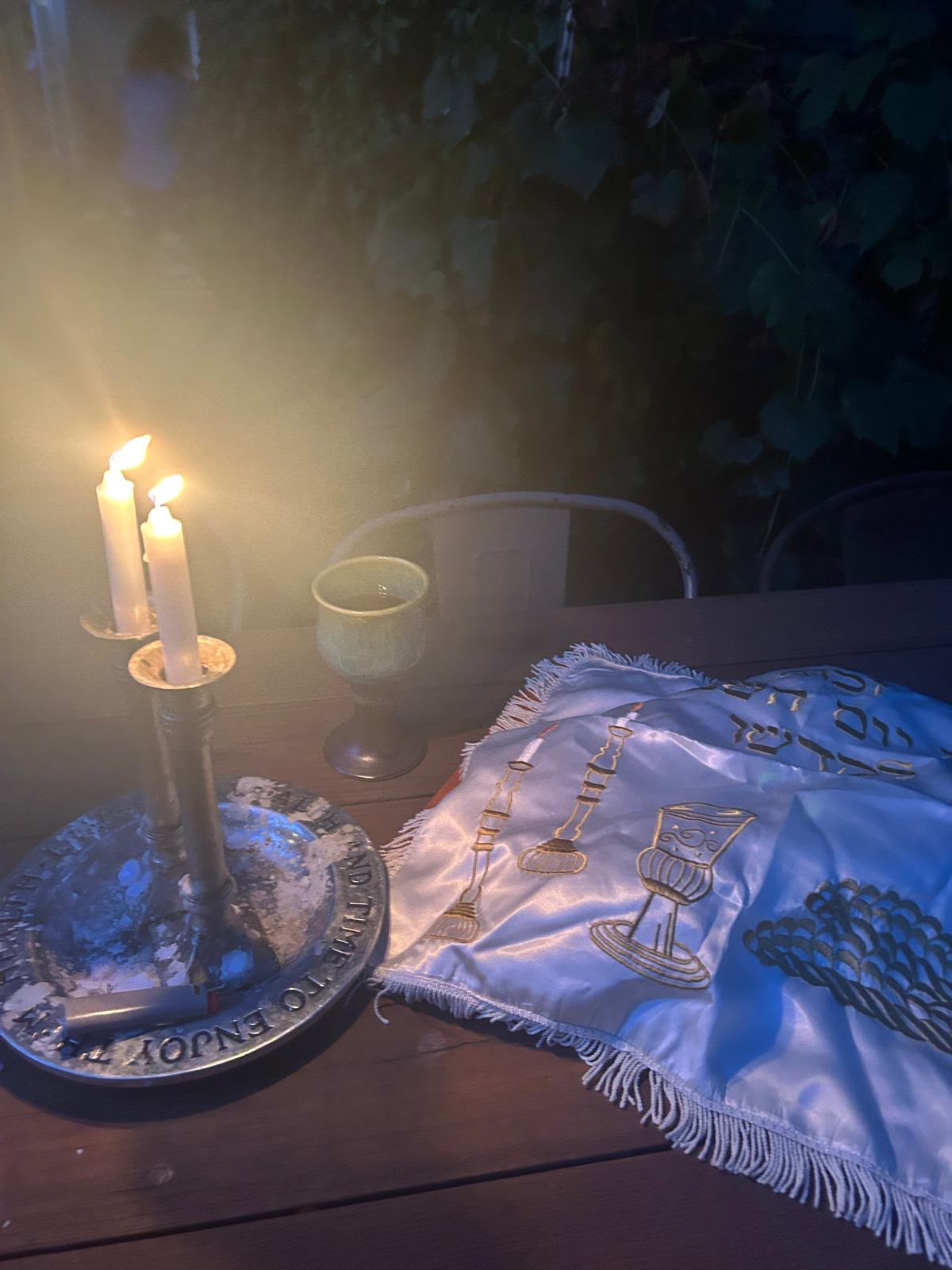
This Shabbat, I invite you all to choose a meaning of Lech Lecha, whether that's thinking about the repercussions of your actions, considering who you want to be, taking a deep dive into what values you stand for, or making a difficult decision for yourself. It could even be deciding what you wish and how that's going to turn to make space in your life for new things.
Shabbat Shalom,
Gal Rubel, Regional N’siah of BBYO Argentina
All views expressed on content written for The Shofar represent the opinions and thoughts of the individual authors. The author biography represents the author at the time in which they were in BBYO.
Explore More Stories
Identity

Taking The Risk
A personal reflection on what it means to risk starting over in order to feel safe and proud being Jewish.

Identity

The Importance of Traditions
From pancakes to paperclips, traditions build connections and friendships.

Opinion

Seatbelt Stories
Giving rides to underclassmen in BBYO, and in general, hits different. Why?