| |
|
|
This history of the foundational war in the Arab-Israeli conflict is groundbreaking, objective, and deeply revisionist. A riveting account of the military engagements, it also focuses on the war's political dimensions. Benny Morris probes the motives and aims of the protagonists on the basis of newly opened Israeli and Western documentation. The Arab side—where the archives are still closed—is illuminated with the help of intelligence and diplomatic materials.
Start Reading →
|
 |
Many Americans who care about Israel's future are questioning whether the hard-line, uncritical stances adopted by many traditional pro-Israel advocates really serve the country's best interests over the long-term. Moderate Jeremy Ben-Ami, founder of J Street, the new pro-Israel, pro-peace political movement, punctures many of the myths that have long guided our understanding of the politics of the American Jewish community and have been fundamental to how pro-Israel advocates have pursued their work. Ben-Ami, whose grandparents were first-generation Zionists and founders of Tel Aviv, tells the story of his own evolution toward a more moderate viewpoint. He sketches a new direction for both American policy and the conduct of the debate over Israel in the American Jewish community.
Start Reading →
|
 |
A family saga and a magical self-portrait of a writer who witnessed the birth of a nation and lived through its turbulent history. A Tale of Love and Darkness is the story of a boy who grows up in war-torn Jerusalem, in a small apartment crowded with books in twelve languages and relatives speaking nearly as many. The story of an adolescent whose life has been changed forever by his mother’s suicide. The story of a man who leaves the constraints of his family and community to join a kibbutz, change his name, marry, have children. The story of a writer who becomes an active participant in the political life of his nation.
Start Reading →
|
 |
By turns subversive and darkly comic, brutal and tender, Ron Leshem's debut novel is an international literary sensation, winner of Israel's top award for literature, and the basis for a prizewinning film.Beaufort. To the handful of Israeli soldiers occupying the ancient crusader fortress, it is a little slice of hell-a forbidding, fear-soaked enclave perched atop two acres of land in southern Lebanon, surrounded by an enemy they cannot see. And to the thirteen young men in his command, twenty-one-year-old Lieutenant Liraz "Erez" Liberti is a taskmaster, confessor, and their only hope in the face of attacks that come out of nowhere and missions seemingly designed to get them all killed.All around them, tension crackles in the air. Long stretches of boredom and black humor are punctuated by flashes of terror. And the threat of death is constant. But in their stony haven, Erez and his soldiers have created their own little world, their own rules, their own language. And here Erez listens to his men build castles out of words, telling stories, telling lies, talking incessantly of women, sex, and dead comrades. Until, in the final days of the occupation, Erez and his squad of fed-up, pissed-off, frightened young soldiers are given one last order: a mission that will shatter all remaining illusions-and stand as a testament to the universal, gut-wrenching futility of war.
Start Reading →
|
|
|
Exodus is a historical novel by American novelist Leon Uris about the founding of the State of Israel. Published in 1958, it begins with a compressed retelling of the voyages of the 1947 immigration ship Exodus.
Start Reading →
|
 |
In From Herzl to Rabin, Amnon Rubinstein traces the history of the Israeli state and provides the reader with a fascinating study of Zionism. Moving deftly between the roles of objective historian and persuasive politician, Rubinstein uses his skills to show both the political and religious aspects of Zionism and the attacks on it by the haredim and Post- and anti-Zionists.
Start Reading →
|
 |
This heart-warming, charming and clever first novel dips into the lives of each of the inhabitants of a village in Israel. It is 1995 and Noa and Amir, a student couple, have decided to move in together. Noa is studying photography in Jerusalem and Amir is a psychology student in Tel Aviv. They choose a small apartment in a village in the hills, midway between the two cities.
Start Reading →
|
 |
Why are words so important to so many Jews? Novelist Amos Oz and historian Fania Oz-Salzberger roam the gamut of Jewish history to explain the integral relationship of Jews and words. Through a blend of storytelling and scholarship, conversation and argument, father and daughter tell the tales behind Judaism’s most enduring names, adages, disputes, texts, and quips. These words, they argue, compose the chain connecting Abraham with the Jews of every subsequent generation. Framing the discussion within such topics as continuity, women, timelessness, and individualism, Oz and Oz-Salzberger deftly engage Jewish personalities across the ages, from the unnamed, possibly female author of the Song of Songs through obscure Talmudists to contemporary writers. They suggest that Jewish continuity, even Jewish uniqueness, depends not on central places, monuments, heroic personalities, or rituals but rather on written words and an ongoing debate between the generations. Full of learning, lyricism, and humor, Jews and Words offers an extraordinary tour of the words at the heart of Jewish culture and extends a hand to the reader, any reader, to join the conversation.
Start Reading →
|
 |
A groundbreaking collection of essays by celebrated international writers bears witness to the human cost of fifty years of Israeli occupation of the West Bank and Gaza. In Kingdom of Olives and Ash, Michael Chabon and Ayelet Waldman, two of today's most renowned novelists and essayists, have teamed up with the Israeli NGO Breaking the Silence—an organization comprised of former Israeli soldiers who served in the occupied territories and saw firsthand the injustice there—and a host of illustrious writers to tell the stories of the people on the ground in the contested territories.
Start Reading →
|
 |
Palestinian and Israeli Public Opinion is based on a unique project: the Joint Israeli-Palestinian Poll (JIPP). Since 2000, Jacob Shamir and Khalil Shikaki have directed joint surveys among Israelis and Palestinians, providing a rare opportunity to examine public opinion on two sides of an intractable conflict. Adopting a two-level game theory approach, Shamir and Shikaki argue that public opinion is a multifaceted phenomenon and a critical player in international politics. They examine how the Israeli and Palestinian publics' assessments, expectations, mutual perceptions and misperceptions, and overt political action fed into domestic policy formation and international negotiations―from the failure of the 2000 Camp David summit through the second Intifada and the elections of 2006. A discussion of the study's implications for policymaking and strategic framing of future peace agreements concludes this timely and informative book.
Start Reading →
|
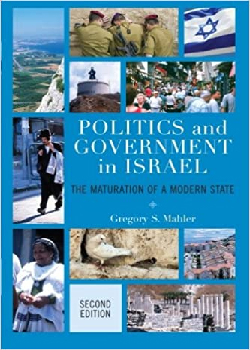 |
This balanced and comprehensive text explores Israeli government and politics from both institutional and behavioral perspectives. After briefly discussing Israel’s history and the early development of the state, Gregory Mahler then examines the social, religious, economic, cultural, and military contexts within which Israeli politics takes place. He makes special note of Israel’s geopolitical situation of sharing borders with, and being proximate to, several hostile Arab nations. The book explains the operation of political institutions and behavior in Israeli domestic politics, including the constitutional system and ideology, parliamentary government, the prime minister and the Knesset, political parties and interest groups, the electoral process and voting behavior, and the machinery of government. Mahler also considers Israel’s foreign policy setting and apparatus, the Palestinians and the Israeli-Palestinian conflict, the particularly sensitive questions of Jerusalem and the Israeli settlement movement, and the Middle East peace process overall. This clear and concise text provides an invaluable starting point for all readers needing a cogent introduction to Israel today.
Start Reading →
|
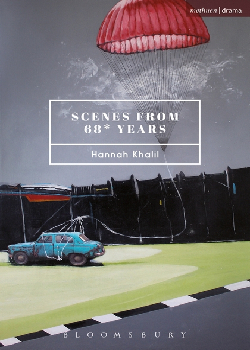 |
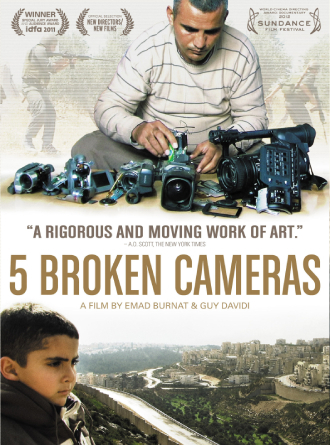
Scenes from 68 Years is a selection of intertwined vignettes telling the story of ordinary Palestinians at a very human level with mischievous humour. It offers snapshots of the routine of life in the shadow of occupation: we look into an Israeli household with a rebellious pro-Palestinian teenager, join a tediously long queue at an Israeli check point, and get swept into an absurd act of civil disobedience by Palestinian civilians in a desperate attempt to get worldwide media attention.
Start Reading →
|
|
|
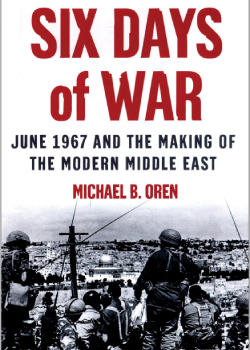
Though it lasted for only six tense days in June, the 1967 Arab-Israeli war never really ended. Every crisis that has ripped through this region in the ensuing decades, from the Yom Kippur War of 1973 to the ongoing intifada, is a direct consequence of those six days of fighting.
Start Reading →
|
|

|
The story of a lost dog, and the discovery of first love on the streets of Jerusalem are portrayed here with a gritty realism that is as fresh as it is compelling.
Start Reading →
|
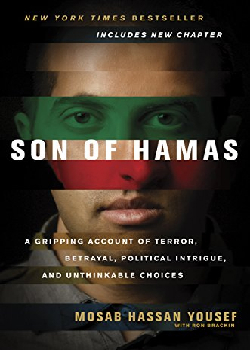 |
Since he was a small boy, Mosab Hassan Yousef has had an inside view of the deadly terrorist group Hamas. The oldest son of Sheikh Hassan Yousef, a founding member of Hamas and its most popular leader, young Mosab assisted his father for years in his political activities while being groomed to assume his legacy, politics, status and power. But everything changed when Mosab turned away from terror and violence, and embraced instead the teachings of another famous Middle East leader. In Son of Hamas, Mosab Yousef-now called "Joseph"-reveals new information about the world's most dangerous terrorist organization and unveils the truth about his own role, his agonizing separation from family and homeland, the dangerous decision to make his newfound faith public, and his belief that the Christian mandate to "love your enemies" is the only way to peace in the Middle East.
Start Reading →
|
 |
Start-up Nation addresses the trillion dollar question: How is it that Israel—a country of 7.1 million, only 60 years old, surrounded by enemies, in a constant state of war since its founding, with no natural resources—produces more start-up companies than large, peaceful, and stable nations like Japan, China, India, Korea, Canada and the UK?
Start Reading →
|
 |
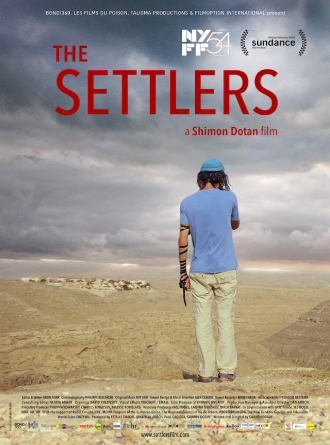
In The Accidental Empire, Gershom Gorenberg examines the strange birth of the settler movement in the ten years following the Six-Day War and finds that it was as much the child of Labor Party socialism as of religious extremism. The giants of Israeli history―Dayan, Meir, Eshkol, Allon―all played major roles in this drama, as did more contemporary figures like Sharon, Rabin, and Peres. Gorenberg also shows how three American presidents turned a blind eye to what was happening in the territories, and reveals their strategic reasons for doing so.
Start Reading →
|
 |
Tracing the dramatic changes in Jewish religion, culture, and identity from the seventeenth century to 1948, The Jew in the Modern World, Third Edition, remains the most complete sourcebook on modern Jewish history available. Now thoroughly expanded and updated, this critically acclaimed volume of primary materials features previously unpublished and inaccessible sources concerning the Jewish experience in Eastern Europe, the Middle East, and North Africa; women in Jewish history; American Jewish life; the Holocaust; and Zionism and the nascent Jewish community in Palestine on the eve of the establishment of the State of Israel. The documents are arranged chronologically in each chapter and are meticulously and extensively annotated and cross-referenced. Providing useful tables detailing Jewish demographic trends, this unique text is ideal for courses in modern Jewish history, Zionism and Israel, the Holocaust, or modern European history.
Start Reading →
|
 |
A farmer from a village in the occupied West Bank, cut off from his olive groves by the construction of Israel’s controversial separation wall, asked Israeli human rights lawyer Michael Sfard to petition the courts to allow a gate to be built in the wall. While the gate would provide immediate relief for the farmer, would it not also confer legitimacy on the wall and on the court that deems it legal? The defense of human rights is often marked by such ethical dilemmas, which are especially acute in Israel, where lawyers have for decades sought redress for the abuse of Palestinian rights in the country’s High Court―that is, in the court of the abuser. In The Wall and the Gate, Michael Sfard chronicles this struggle―a story that has never before been fully told― and in the process engages the core principles of human rights legal ethics.
Start Reading →
|
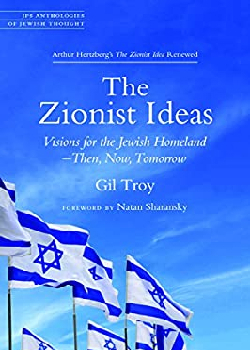 |
The Zionist Ideas: Visions for the Jewish Homeland—Then, Now, Tomorrow sheds light on the surprisingly diverse and shared visions for realizing Israel as a democratic Jewish state. Building on Arthur Hertzberg’s classic, The Zionist Idea, Gil Troy explores the backstories, dreams, and legacies of more than 170 passionate Jewish visionaries—quadruple Hertzberg’s original number, and now including women, mizrachim, and others—from the 1800s to today.
Start Reading →
|
|
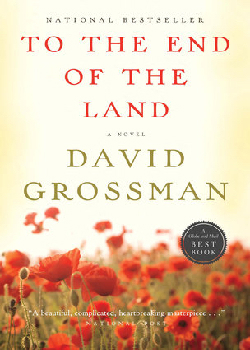
David Grossman tells the powerful story of a mother’s love for her son. Just before his release from service in the Israeli army, Ora’s son Ofer is sent back to the front for a major offensive. In a fit of preemptive grief and magical thinking, so that no bad news can reach her, Ora sets out on an epic hike in the Galilee. She is joined by an unlikely companion—Avram, a former friend and lover with a troubled past—and as they sleep out in the hills, Ora begins to conjure her son. Ofer’s story, as told by Ora, becomes a surprising balm both for her and for Avram—and a mother’s haunting meditation on war and family.
Start Reading →
|
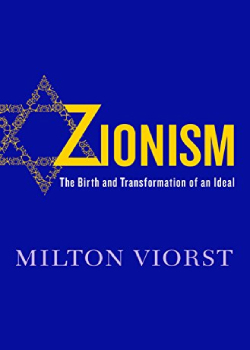 |
Beginning with the shattering of the traditional Jewish society during the Enlightenment, Viorst covers the recent history of the Jews, from the spread of Jewish Emancipation during the French Revolution Era to the rise of the exclusionary anti-Semitism that overwhelmed Europe in the late nineteenth century. Viorst examines how Zionism was born and follows its development through the lives and ideas of its dominant leaders, who all held only one tenet in common: that Jews, for the first time in two millennia, must determine their own destiny to save themselves. But, in regards to creating a Jewish state with a military that dominates the region, Viorst argues that Israel has squandered the goodwill it enjoyed at its founding, and thus the country has put its own future on very uncertain footing.
Start Reading → |