- Get Involved
- BBYO Near You
- Summer Experiences
-
International Convention
International Convention
-
AZA & BBG Movement
AZA & BBG Movement
- About BBYO
Connection
BBYO Beyond Barriers

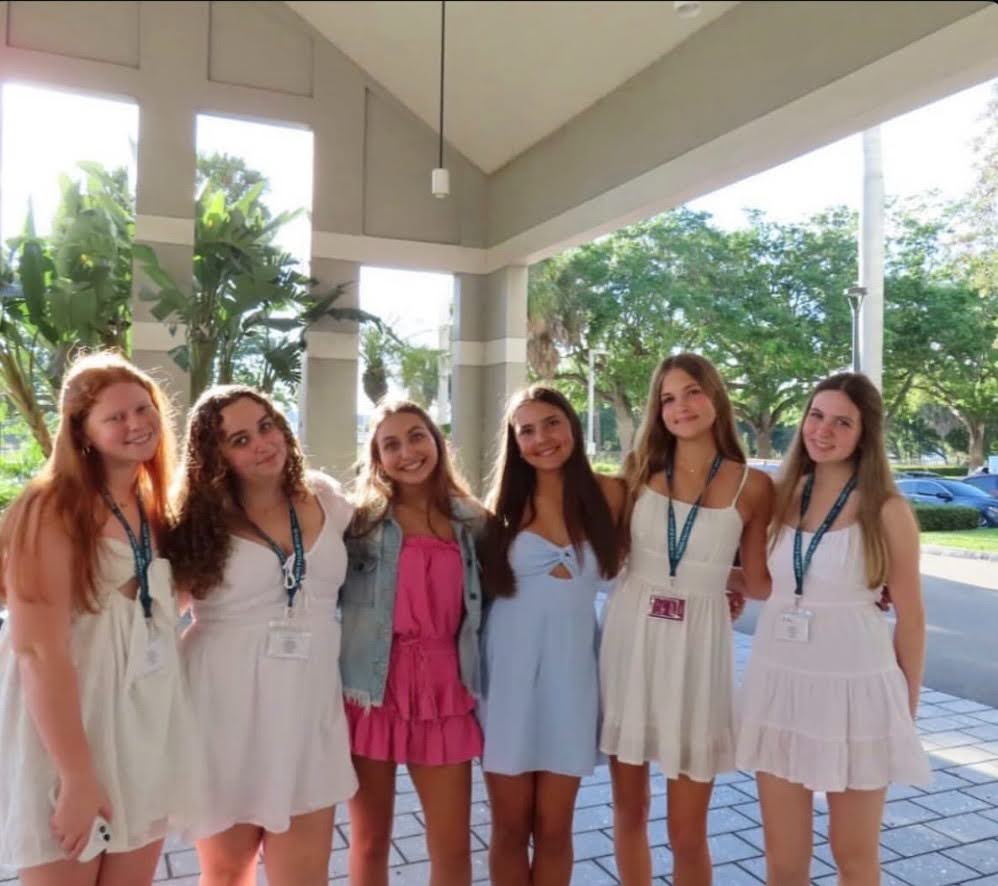
In my home chapter, Simchat HaDerech BBYO of Gold Coast Region, you will rarely find a member not wearing sweatpants or a sweatshirt, regardless of the weather. Looking north to Greater Atlanta Region (GAR), athletic wear seems to take its place. From a global perspective, looking across the Atlantic to regions like BBYO UK and Ireland, attire may reflect different cultural norms and fashion preferences than what we are used to. From seemingly minor differences in attire to distinct chapter traditions, these regional differences offer a glimpse into the diversity that exists within one international movement. Yet whether dressed in BBYO merch, sweat sets, or even a kilt, members worldwide remain united by something far greater than clothing choices: a shared sense of belonging and pride in their Jewish identities. Above all, we are united by a love for BBYO that transcends borders.
However, behind these regional differences lies a much larger story. How did an organization that began with a small group of Jewish teens in Nebraska grow into a worldwide movement spanning countries across the globe? More importantly, how has this expansion transformed access to third spaces and Jewish programming in rural areas for Jewish teens whose geographic location might otherwise limit their opportunities for involvement?
BBYO’s roots trace back to 1923, when a group of Jewish boys in Omaha, Nebraska established the first AZA chapter. At a time when Jewish teenagers were restricted from social programming and faced exclusion from certain existing organizations, this opportunity to come together united teens with a common interest to belong to something greater than themselves. Soon after, the organization formally became an international order on May 3, 1924, with aspirations reaching far beyond Omaha for years to come. As international chapters formed, AZA developed a network of Jewish teens connected through shared values of tradition and identity. Following the introduction of the B’nai B’rith Girls (BBG) movement and its establishment in the international order, the foundations for the BBYO movement we cherish today were born.
What began as an outlet for Jewish teens in one American city to build community had evolved into something much larger: an international display of community and pluralism in which everyone can find their own place.
Although BBYO members share an international identity, their experiences are inevitably influenced by geography. Specifically, Jewish populations are unevenly distributed across the United States, similar to BBYO’s chapters and regions. For example, BBYO’s Greater Atlanta Region serves the metropolitan Atlanta area, while, in contrast, Delta Region stretches across five states: Alabama, Arkansas, Louisiana, Mississippi, and Tennessee.
For teenagers living in communities with greater access to programming and involvement with their Jewish peers, the opportunities BBYO provides may be relatively accessible. Local organizations such as synagogues and youth organizations provide multiple avenues for engagement as well. However, for those living in rural areas or smaller communities, finding other Jewish teenagers may be significantly more challenging. A teenager in a major metropolitan area might have several Jewish organizations within a short drive, while someone in a rural community with limited outreach abilities could face considerable hurdles to attend such programs.
This raises an important question: What can be done to ensure that teens living in places away from established Jewish communities can maintain stable access to opportunities such as these? BBYO has made efforts to address this disparity. In 2019, with the launch of the For Every Jewish Teen campaign, BBYO has focused on expanding access to its programs in rural and smaller communities across the US. According to BBYO, the campaign’s efforts have helped more than 800 teenagers become members who might otherwise have lacked opportunities to participate in Jewish life. Additionally, more than 1,500 teenagers have also participated in local programming supported by the initiative. This widespread growth demonstrates how expanding access can create new opportunities for Jewish teens to participate in programs that they might otherwise not have been able to do.
Furthermore, BBYO’s significance can be demonstrated through the concept of third places. By definition, third places are social environments separate from the first place, the home, and the second place, the workplace. They provide an environment that fosters social interaction and a sense of belonging, and for anyone that has been to a BBYO program, it serves precisely this purpose. While school provides an academic and often competitive environment, and home offers a familial one, BBYO creates opportunities to build connections and make lifelong friendships. Most importantly, members have the opportunity to develop friendships through a shared Jewish identity.
The importance of these spaces becomes even more apparent when considering rural and global outreach. By connecting geographically limited areas, BBYO works to ensure that fewer Jewish teens are limited by factors out of their control such as geographic location. Today, BBYO has a presence in more than 60 countries, and is expanding as we speak. Despite the geographic limitations that exist, BBYO strives to bridge the gap by extending international leadership and bonding opportunities to foster global participation.
Although geographic boundaries define where we live, they do not restrict who we can connect with and where we belong, and BBYO allows us to discover this potential. No matter how different our individual experiences may be, BBYO helps us understand that we are all part of something greater than ourselves.
All views expressed on content written for The Shofar represent the opinions and thoughts of the individual authors. The author biography represents the author at the time in which they were in BBYO.
Explore More Stories
Opinion

Junior Year College Tips
College can be stressful and hard to plan, here are some tips!
Identity

The People of The Book: Now on an App
Technology is changing how Jewish teens study, pray, and express their identity, bringing both new connections and new challenges for our traditions.
Identity

Being Enough in a Movement That Does So Much
An article about redefining what it means to be involved in BBYO, overcoming FOMO, and recognizing that your value and identity are not defined by how much you do, but by who you are and the impact you make.