- Get Involved
- BBYO Near You
- Summer Experiences
-
International Convention
International Convention
-
AZA & BBG Movement
AZA & BBG Movement
- About BBYO
Opinion
The Critical Dilemma Facing Jewish Teens

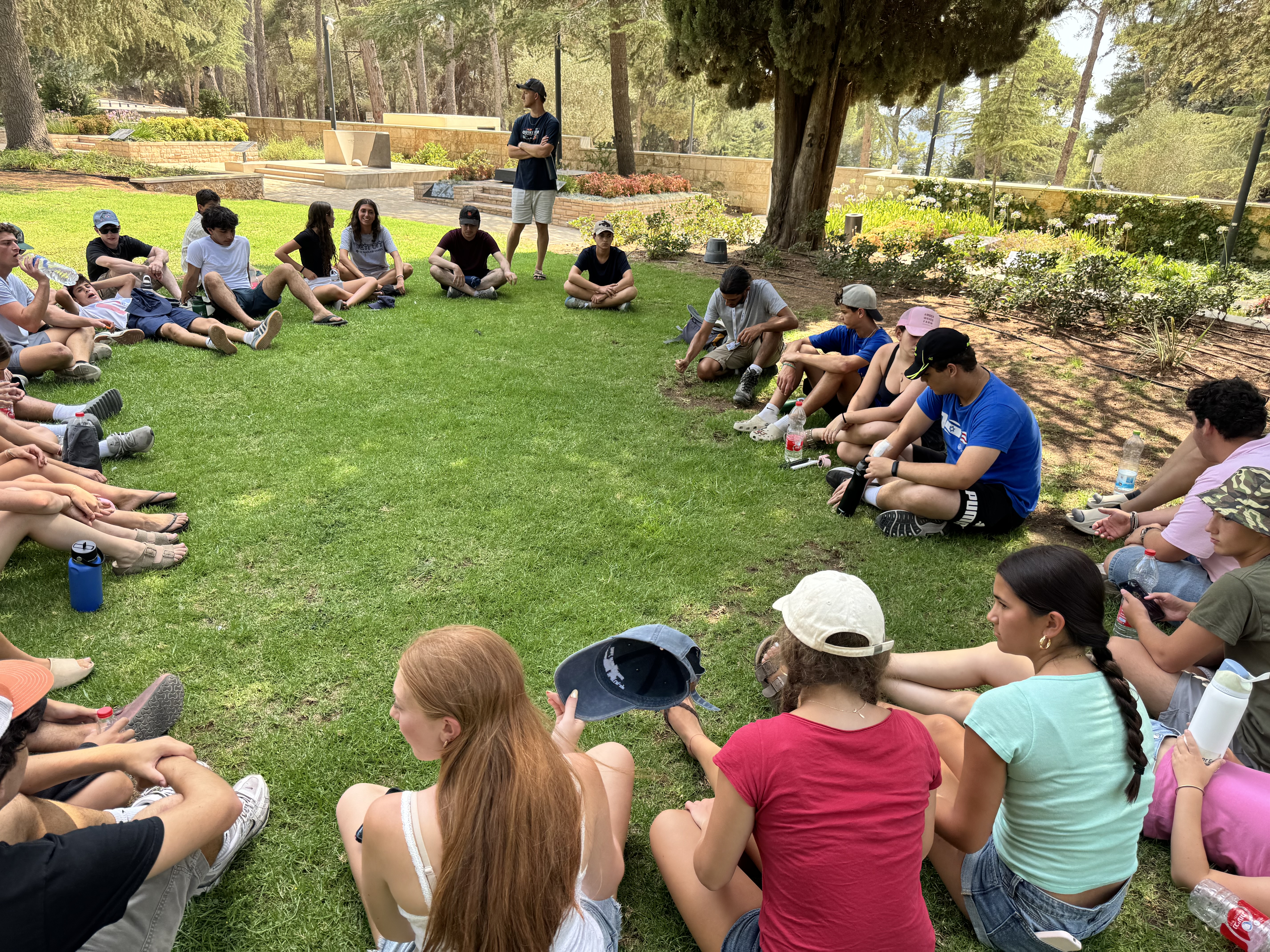
In the immediate aftermath of October 7th, 2023, when many rushed to condemn the attacks against civilians, sexual violence, and the destruction of entire Israeli communities, most Jews expected progressive activist spaces to show solidarity. Many of us encountered silence, deflection, or rhetoric that was dismissive of our grief.
At the time, I was studying at Solomon Schechter Day School in Northbrook, Illinois, and I have a distinct memory of a screenshot displayed on our class's whiteboard. It was a photo of a post sent out by the Chicago chapter of the Black Lives Matter Movement. The image showed a masked Hamas paraglider carrying a Palestinian flag — imagery widely associated with the October 7th attacks. Yet during the George Floyd protests of 2020 and the rise of the Black Lives Matter movement, many Jewish leaders rushed to march, link arms, and fight injustice alongside them. Throughout American history, Jewish leaders and communities have been on the front lines of political progress, from women’s suffrage to the civil rights movement. In modern Jewish progressive circles, many derive these views from a central concept in Judaism — Tikkun Olam, which is interpreted as “repairing the world.” Thus, for many American Jews, progressive politics have become not just a voting preference, but part of our core moral identity.
Among all Jewish communities, it is teen voices that tend to be the most progressive. I am a 16-year-old Chapter President of a Jewish youth fraternity in the northern suburbs of Chicago. And since October 7th, I have witnessed firsthand the fracture of the relationship between progressive politics and Jewish identity. While hostages were still in captivity, questioning the Netanyahu government’s actions felt untimely — but as the crisis came to an end, many Jewish teens began confronting questions we had suppressed in the shock and fear of the moment. I recall my own BBYO chapter discussing serious questions about the conduct of the Israeli government in Gaza, and the deep divisions we had. A year or so later, this rift within Jewish youth has created a paralyzing dilemma: do we align with the Trump administration, which has, for the most part, publicly displayed unwavering support for the Israeli government while pursuing increasingly controversial domestic policy, or shift to the left, which is beginning to platform figures who Jewish teens see as dismissive of rising antisemitism or hostile towards Zionism?
Yet for many Jewish teens it isn’t even about choosing between left and right. It’s really just reconciling identities that suddenly feel politically incompatible: progressive values, fear of antisemitism, attachment to Israel, and discomfort with war. Many Jewish teens I've spoken with do not feel obligated to provide unconditional support for Israel — we just want to hold onto our heritage while still retaining a moral compass. Yet in today’s world, that balance often feels impossible.
The result is that many Jewish teens are feeling increasingly isolated. It’s led to some distancing themselves from Zionism altogether out of hopelessness — or withdrawing from social justice spaces where Zionists no longer feel welcome, as LGBTQ Jewish groups have found in some pride spaces. On the other hand, amid the documented rise of antisemitism, particularly within some progressive spaces, many threw their weight behind a political movement that some view as openly embracing illiberal rhetoric and democratic backsliding.
This reality reflects the increasingly partisan nature of American politics. The teens with whom I have spoken — fellow chapter leaders and regional figures across the country — echo the same message: “everyone is just driving themselves farther apart.” To be clear, criticism of the Israeli government is not inherently antisemitic, nor is support for Palestinian civilians incompatible with Jewish values. In fact, both of these ideas should be encouraged — many Jewish teens, including myself, have been deeply critical of the war in Gaza and the ensuing conflict. The tension emerges when Jewish attachment to Israel is treated as morally disqualifying in spaces that once emphasized pluralism and coalition-building.
In conservative spaces, some turn a blind eye to attacks on democratic norms in exchange for political support for Israel. Some teens who gravitated to the right in the aftermath of October 7th now feel conflicted, as modern conservatism begins to directly clash with their wider opinions on civil rights, abortion, immigration, and other relevant social issues. This leaves a generation of Jews unsure where their political home lies; many of us just want to speak without a label and be afforded the same flexibility as everyone else.
The deepest issue we face today is that American politics increasingly demands ideological purity. Nuance is seen as weakness, contradiction is labeled as hypocrisy, and compromise is treated as surrender. But throughout history, Jewish identity has never been a story of absolutes. We come from tradition rooted in moral debate, asking difficult questions, critiquing authority, and making a difference. That is why so many Jewish teens feel politically stranded; we are being pushed toward rigid partisanship, instead of seeking the good-faith change that Tikkun Olam demands. Modern politics insists we pick a side and stop asking questions. Judaism has always taught the opposite — we never stop asking.
All views expressed on content written for The Shofar represent the opinions and thoughts of the individual authors. The author biography represents the author at the time in which they were in BBYO.
Explore More Stories

Identity

Identity, Identity, Who am I? A BBG!
How a cheer circle is an empowering experience.

Connection

Feeling So Close Yet So Far
BBYO is full of friendships where you are thousands of miles away from one another, which can be hard. Here is my experience with long distance friendships and the impact those friends have had on me.

Identity

Why Does Everyone Have Their Life Planned Out at 16?
Advice for students who feel the pressure of catching up to their peers and feel like they aren’t accomplishing enough.