- Get Involved
- BBYO Near You
- Summer Experiences
-
International Convention
International Convention
-
AZA & BBG Movement
AZA & BBG Movement
- About BBYO
Identity
The Power of the Shofar

I’ve always loved reading, but until I joined The Shofar, I hated writing. To me, “writing” meant an introduction, two body paragraphs, and a conclusion. It meant drafting a thesis statement analyzing a boring Shakespeare play and trying to find a logical fallacy in an article about teen spending habits. I was good at writing, but English class was decidedly boring.
Then, my life changed. It’s the beginning of my junior year of high school, and I am Regional Mazkirah/Gizborit on a weekly board call. On the meeting agenda, “Apply for the I.L.N.” is bolded in a big font. This was a requirement. I scrolled through some of my options, assuming Press Corps would best align with my position. I considered each team, and strangely, over TikTok, TableTalk, and Spotify, I was drawn to The Shofar. Again, I was not the fondest of writing, but I liked the idea of building upon a one-hundred-year legacy. Here was a platform that generations of Jewish teens used to speak their minds, to express themselves to an audience that would listen to and understand them. I remember falling down a Shofar rabbit hole, finding a unique array of articles about Israel’s foreign policy, tearful convention reflections, top-ten lists, and sports recaps. The article I remember most of all from that night, and the one that convinced me to apply for the Shofar, was an interpretation of an essay by Jean-Paul Sartre, a French Jewish philosopher. This particular article was so memorable because it showed me that writing for The Shofar could mean whatever I wanted it to.
A few months later, I was given a Hub and eventually sat through my first Press Corps call. I put off writing my article for as long as possible, but eventually, the deadline arrived. I remember the blank Google Doc staring at me menacingly, as if it were challenging me to a duel. I tried to think of something unique that would catch people’s attention, like Jean-Paul Sartre. I blanked and just chose to write about what came easiest to me–my Jewish experience in the South. I thought the article would be unoriginal and cliché; I had heard the story of the bullied kid in a small Jewish community hundreds of times. I lived it, my siblings lived it, my whole region lived it. Regardless, I wrote the article and put my whole heart into making it something I was proud of. A few weeks later, I was featured in The Shofar newsletter and consequently received several texts from friends telling me how much they enjoyed my article. I was shocked; I learned that my stories didn’t have to be original to be powerful. They just had to be authentic.
This started me down a path to love writing. I wrote an article about my favorite podcast, and I reveled in the freedom I had compared to school essays. There was no rubric, no rules against first-person pronouns, no mandated structure, and no unreachable expectations; I just had to write about something I thought people could connect to. Over time, I found my voice. The blank Google Doc no longer had a menacing stare. Rather, it glowed with possibility, my very own personal canvas. I also learned that not every article about BBYO had to be positive; Shofar readers are passionate, long-time BBYO members who want this movement to thrive and change for the better–reflection is the first step to action.
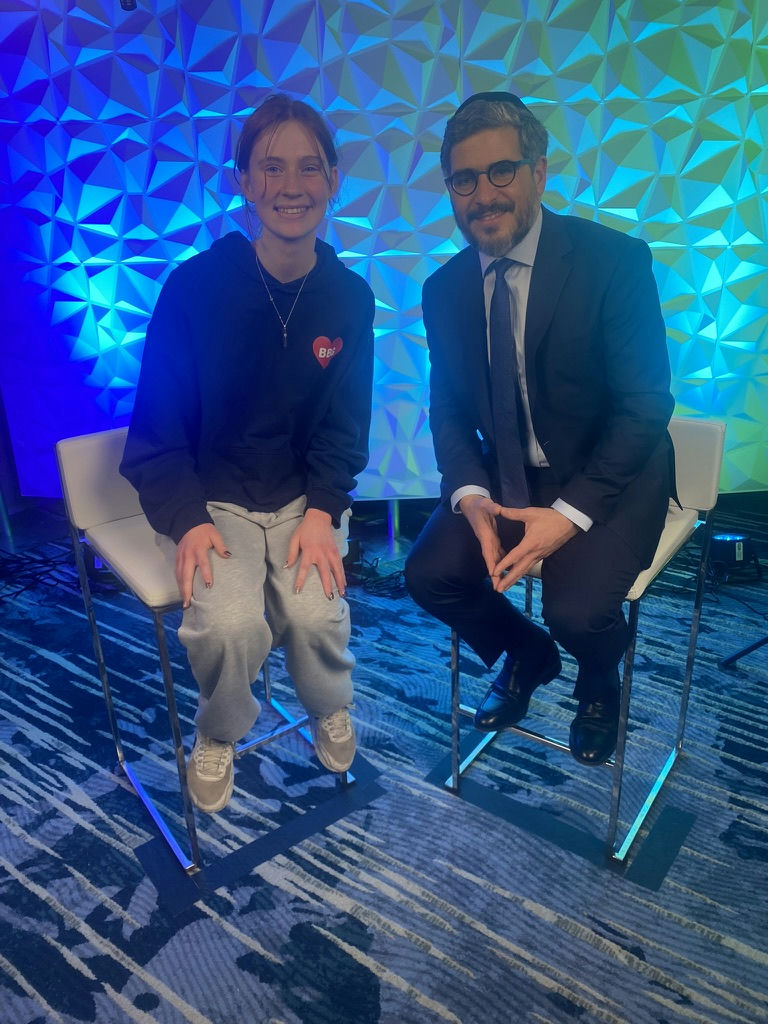
With my commitment to The Shofar came opportunities. I got to interview a Rabbi and ask him a meaningful question about his politics at IC. I scripted podcasts, received impactful leadership positions, met amazing friends, and read articles by other teens that challenged my perspectives. When it was time to pick a major and a college, I realized I wanted to work for a media company, an institution with a mission I value as much as The Shofar’s. Eventually, I started a Substack to write personal essays in a new setting. One of the things I wish I could have told my freshman year self was to join Press Corps sooner. With a passion for The Shofar came better writing, curiosity, confidence, and the motivation to analyze and reflect on the world around me.
All views expressed on content written for The Shofar represent the opinions and thoughts of the individual authors. The author biography represents the author at the time in which they were in BBYO.
Explore More Stories

Identity

Parshat Lech Lecha: The Art of Losing
Looking at my BBYO journey through a lech lecha lens.


Identity

What Makes Camp Songs Unique from Others?
For the overnight camp people and people who don’t want to go back.